
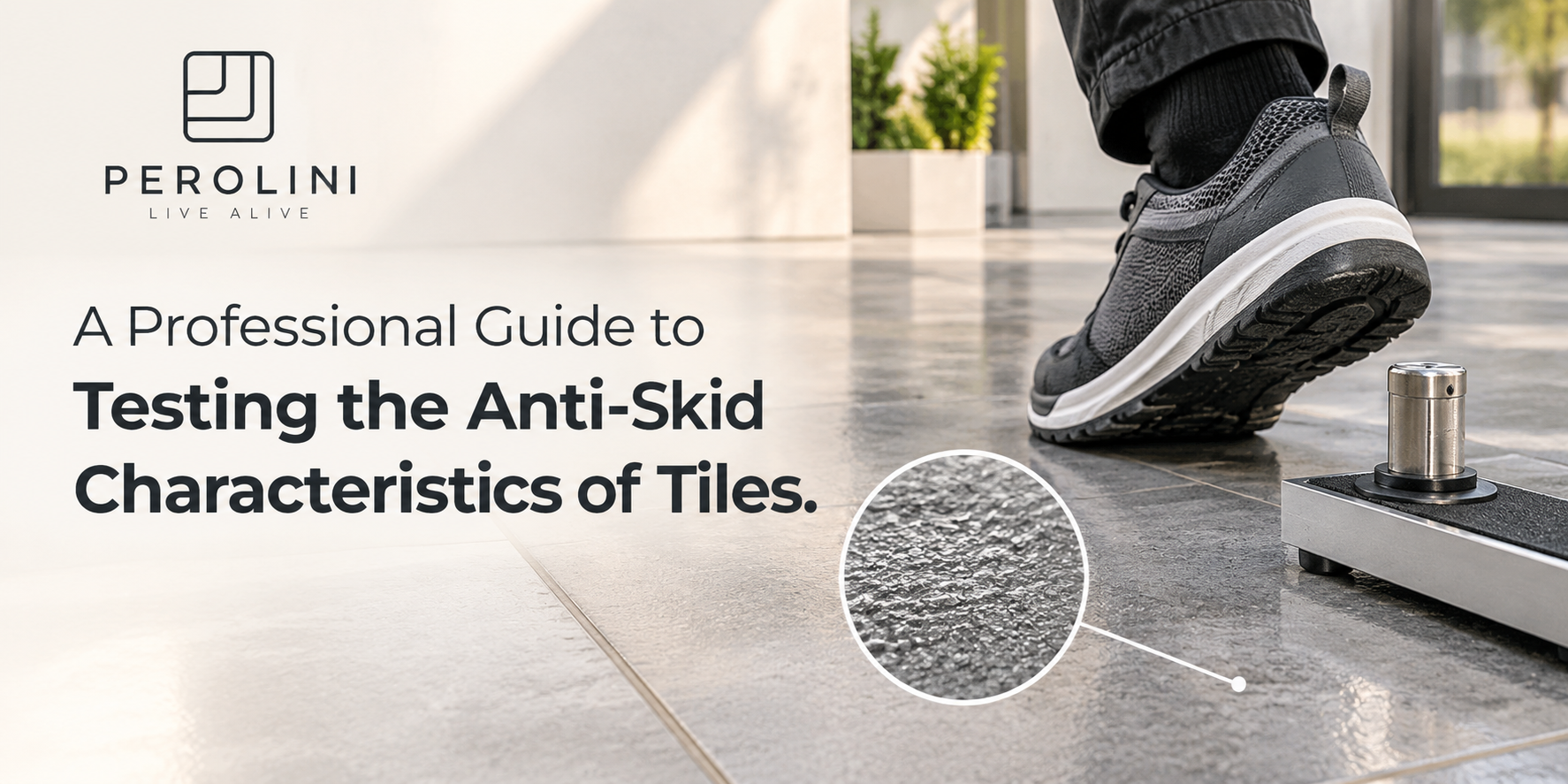
A wet bathroom floor will make an ordinary walk into a potential slip. Similarly, a wet balcony increases the risk of slipping. The slip accident occurs in seconds, but it may result in permanent injury. Many prefer tiles for color and cost, but anti-slip features in wet areas are essential. This is what the best ceramic tile shops in Sharjah always emphasize to buyers. It is therefore necessary to test the anti-slip properties of tiles.
The anti-skid test provides a good indication of the tile’s skid resistance and suitability for different uses. In bathrooms, kitchens, balconies, entries, and exterior spaces, there may be a greater need for slip resistance compared to dry interior spaces. Using testing and understanding the outcome will assist in making suitable choices.
Various Ways to Test the Anti-Skid Characteristics of Tile
Safety begins with what is right under your feet. Checking the skid resistance of tiles helps you determine their grip, slip resistance, and suitability for various areas. This basic test can help achieve safety and practicality in tile selection.
-
Check the tile surface texture
Begin with the surface of the object. An object with a textured or slightly rough surface is more likely to offer a good grip compared to an extremely smooth one. Just run your fingers over the surface to feel it.
-
Test tiles for different room types
The selection of anti-skid flooring should take into account the particular requirements of every area. For instance, bedrooms require smooth flooring, while bathrooms must have floor coverings with high traction to avoid slipping when wet. The outdoor areas need to have flooring materials suitable for changing weather and having a good amount of traction. Even parquet floor tiles must be chosen according to their application, not just appearance.
-
Add water to the test
The grip level of a tiled floor can be altered very quickly using water. Using water on the tiled surface will enable the researcher to conduct the second grip test to analyze the effect of moisture on the tile surface’s grip. This is particularly important for tiles used in bathrooms, kitchens, balconies, and entrances, as these areas are prone to moisture buildup.
-
Consider wet and oily conditions
Water is not the only problem. In kitchens and work areas, the floors could be covered in oil, grease, or any liquid. While some tiles do well on a dry floor, their performance might be different when the tile is covered in liquid.
-
Measure the slip resistance
Testing that is done professionally utilizes an approach that employs measurement techniques as opposed to relying on hand techniques. The equipment used determines the amount of force required for one surface to move over the other surface, depending on the testing technique used.
-
Examine the tile after cleaning
A thin layer may be left on the surface by your cleaning products. To ensure that there have been changes in the grip of the tiles after cleaning them, test their grip. This is more important when you have tiles that are frequently cleaned.
Conclusion
The best flooring needs more than just being attractive; it needs to maintain its traction even when circumstances vary. Anti-slip testing of tiles allows you to know how well the floor will perform under different circumstances.